
Most families visiting the Oregon coast walk right past some of the most accessible marine ecosystems in the Pacific Northwest without even noticing them. Tide pooling at Gold Beach Oregon puts sea stars, hermit crabs, and purple urchins within arm’s reach of kids who have never seen anything like them outside of an aquarium. Gold Beach sits at the mouth of the Wild and Scenic Rogue River, and the rocky intertidal zones just north and south of town rank among the most rewarding on the entire Oregon coast. This guide tells you exactly where to go, when to go, and how to make the most of every low tide.
Table of Contents
- Why Gold Beach Is One of Oregon’s Best Tide Pooling Spots
- Best Tide Pool Locations Near Gold Beach
- Reading Tide Charts and Timing Your Visit
- What You Will Find in the Tide Pools
- Comparing Gold Beach Tide Pool Spots
- Family Preparation: Gear, Safety, and Leave No Trace
- Combining Tide Pooling with Other Gold Beach Oregon Family Activities
- Frequently Asked Questions
- References
Why Gold Beach Is One of Oregon’s Best Tide Pooling Spots
Gold Beach benefits from what locals call the “banana belt” climate, a stretch of the southern Oregon coast that records milder temperatures and fewer storm days than areas to the north. That means more comfortable conditions for families crouching over tide pools on exposed rocky shelves. The coastline here transitions between soft sandy beaches and hard basalt reefs in a way that creates ideal intertidal habitat, supporting species density that rivals anywhere in the state.
Unlike the heavily trafficked tide pools at Cannon Beach further north, Gold Beach pools see far fewer visitors on any given low tide morning. That lower foot traffic translates directly into better wildlife sightings. Sea stars are recovering in this region after the sea star wasting disease outbreak, and Gold Beach reefs are among the spots where ochre stars are being spotted with increasing regularity again.
The town’s location at the Rogue River mouth also means the surrounding geology is diverse. You get nutrient-rich upwelling, rocky headlands, and protected coves all within a short drive of lodging and restaurants. Gold Beach does not just offer a tide pooling excursion; it packages it into a full coastal day that no competing destination in Curry County quite replicates.
Best Tide Pool Locations Near Gold Beach
Meyers Beach at Pistol River State Scenic Viewpoint
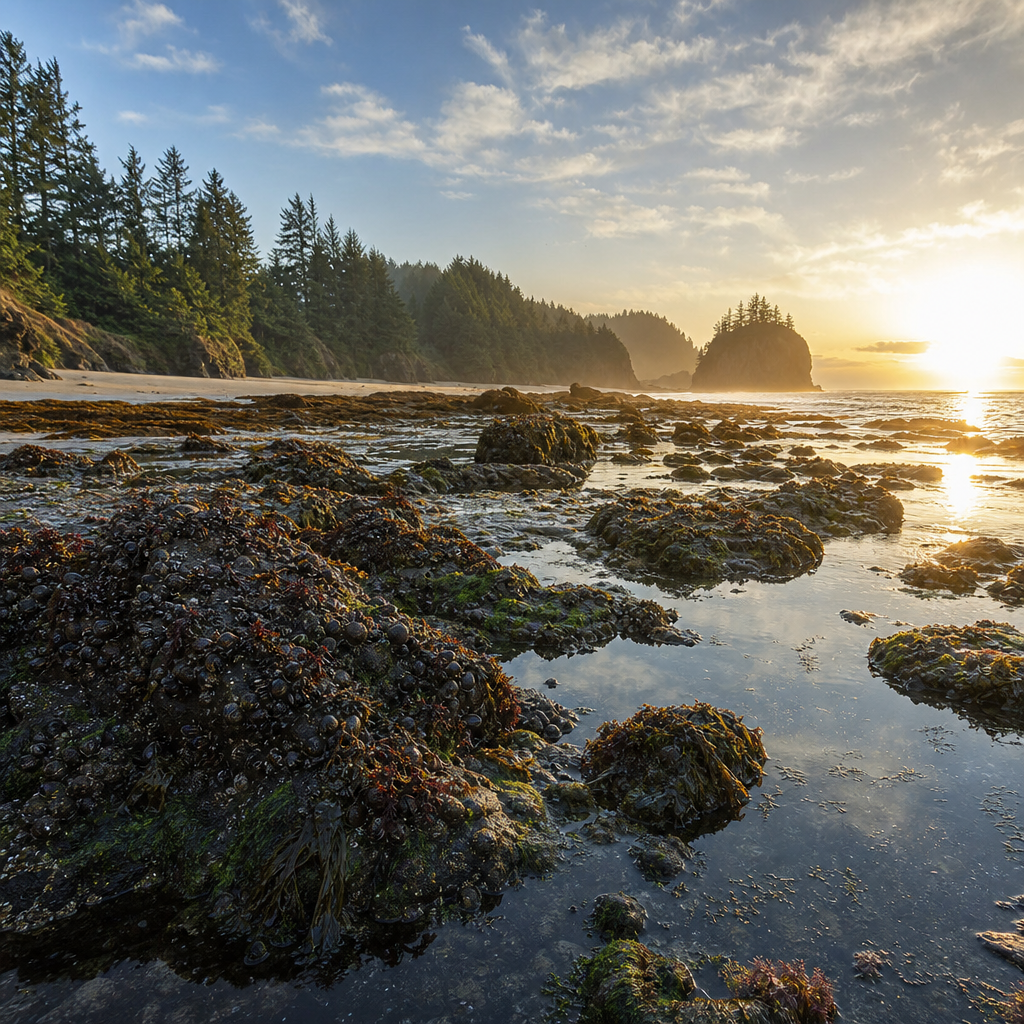
Meyers Beach, located about 11 miles south of Gold Beach near the Pistol River State Scenic Viewpoint, is the standout tide pooling destination. The offshore sea stacks here are dramatically beautiful, and during a minus tide the exposed rock platforms reveal dense mussel beds, aggregating anemones, limpets, and, if you look carefully under ledges, the occasional gumboot chiton, the world’s largest chiton species at up to 13 inches long.
Meyers Beach is easily one of the top spots for tidepooling in southern Oregon, mostly thanks to its unique geology. Massive sea stacks sit right on the shoreline. When the tide goes out, the shallow beach causes the ocean to recede a long way. This leaves the rugged bottoms of the sea stacks completely exposed, trapping seawater in deep pockets along the rocks and making it incredibly easy to walk out and explore the intertidal life. Just remember to arrive one to two hours before the peak low tide, keep a watchful eye on the surf, and leave these fragile creatures undisturbed in their natural habitats.
Access is straightforward. Park at the Beach lot off Highway 101 and clamber down to the beach. The rock shelves are accessible without any technical scrambling, making this realistic for families with younger children. Plan to arrive at least 45 minutes before the predicted low tide to give yourselves maximum exploration time.
Reading Tide Charts and Timing Your Visit
A common mistake families make is showing up at a beach at high tide and wondering where the tide pools are. The best intertidal exploration happens during a minus tide, specifically any tide reading of 0.0 feet or lower on the NOAA tide chart for the Port of Gold Beach station. Readings of -1.0 to -1.5 feet expose sections of reef that are inaccessible at any other time.
NOAA publishes tide predictions at no cost through tidesandcurrents.noaa.gov. For Gold Beach, use Station ID 9431647 (Rogue River, mouth). Check the tide chart at least three days before your visit and identify which mornings have low tides between 7 a.m. and 11 a.m. Morning light is better for spotting cryptic animals, and weather tends to be calmer before afternoon winds build along the southern Oregon coast.
“Intertidal zones are among the most dynamic and biologically productive ecosystems on the planet, shaped hourly by the rhythm of tides.” — NOAA Office of Ocean Exploration and Research
Tide windows are narrow. The usable exploration time at the lowest point of a minus tide is typically 60 to 90 minutes. Outside that window, rising water covers the most productive lower-intertidal zones. Set a phone timer for 30 minutes after arriving at the pools so you begin moving toward higher ground with plenty of margin before surge returns.
Pro tip: Download NOAA’s free tide prediction data for Station 9431647 and screenshot the chart for the week of your visit. Cell service at Meyers Beach and Otter Point can be unreliable, and you do not want to be guessing tide timing when you are standing on wet rocks.
What You Will Find in the Tide Pools
Upper Intertidal Zone: Barnacles and Periwinkles
The highest zone, wetted only by spray and the highest tides, is dominated by acorn barnacles and small periwinkle snails. This is where kids who are nervous about getting close to unfamiliar animals can start. Barnacles are safe to touch gently, and watching them filter-feed when you pour a small amount of seawater over them is genuinely engaging for children ages 3 and up.
Middle Intertidal Zone: Mussels, Anemones, and Hermit Crabs
The middle zone is where most families spend the bulk of their time at Gold Beach pools. Aggregating anemones appear in dense clusters of green or pink, closing up when touched. California mussels form thick beds that shelter dozens of smaller organisms underneath. Hermit crabs are a perennial favorite with children: slow enough to observe closely, and their shell-swapping behavior fascinates kids and adults alike.
Purple shore crabs hide under rocks and in crevices. Lift rocks carefully, always replacing them exactly as found. A displaced rock in the intertidal zone is a destroyed microhabitat.
Lower Intertidal Zone: Sea Stars, Urchins, and Nudibranchs
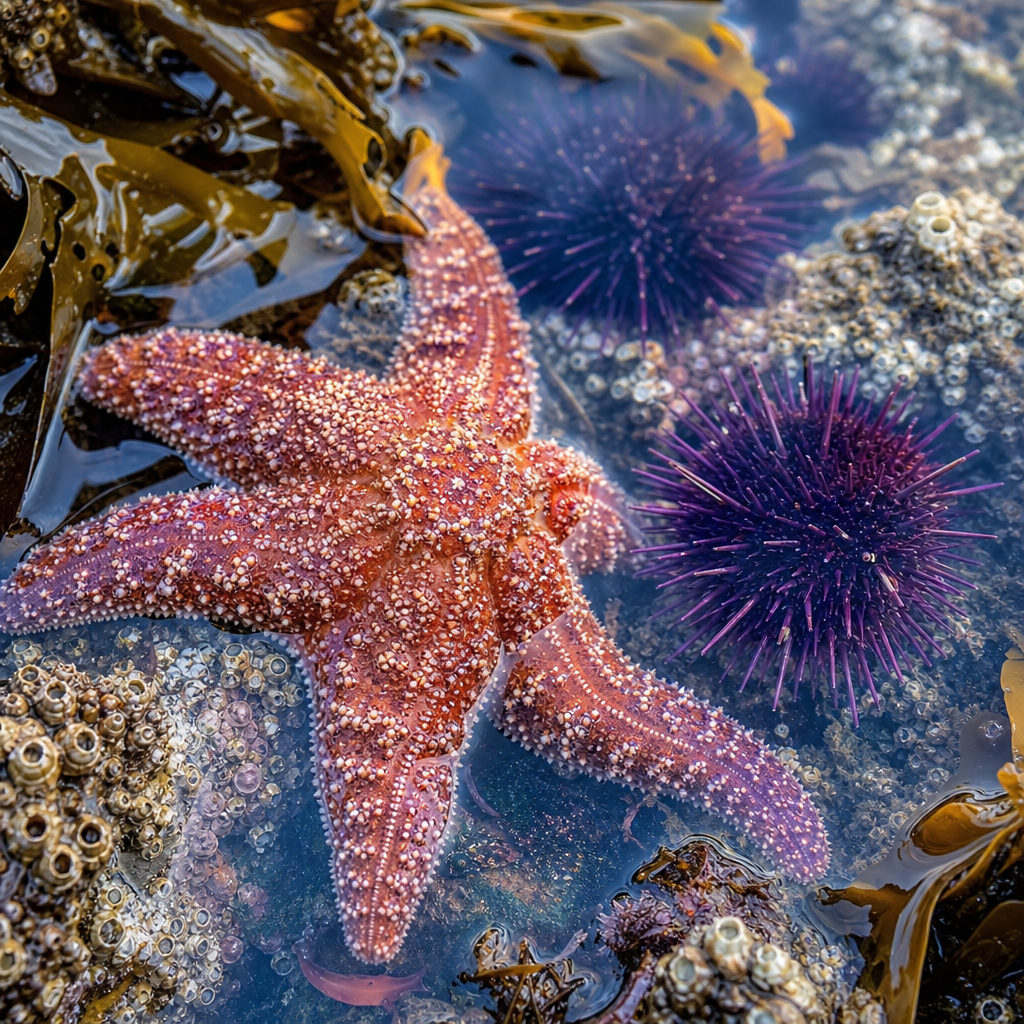
The lower zone, exposed only during minus tides, holds the most spectacular finds. Ochre sea stars in orange, purple, or brown appear in the Meyers Beach pools. Purple sea urchins cluster in pits they excavate in soft rock. Patient observers occasionally spot nudibranchs, small brightly colored sea slugs that look nothing like what most people imagine when they picture a slug. These are animals that even experienced tide poolers get excited about.
Fish are easy to overlook but abundant. Tidepool sculpins and pricklebacks can be found motionless in shallow pools, camouflaged against algae-covered rock. Challenge kids to find one before pointing it out.
Family Preparation: Gear, Safety, and Leave No Trace
Essential Gear for Tide Pooling at Gold Beach
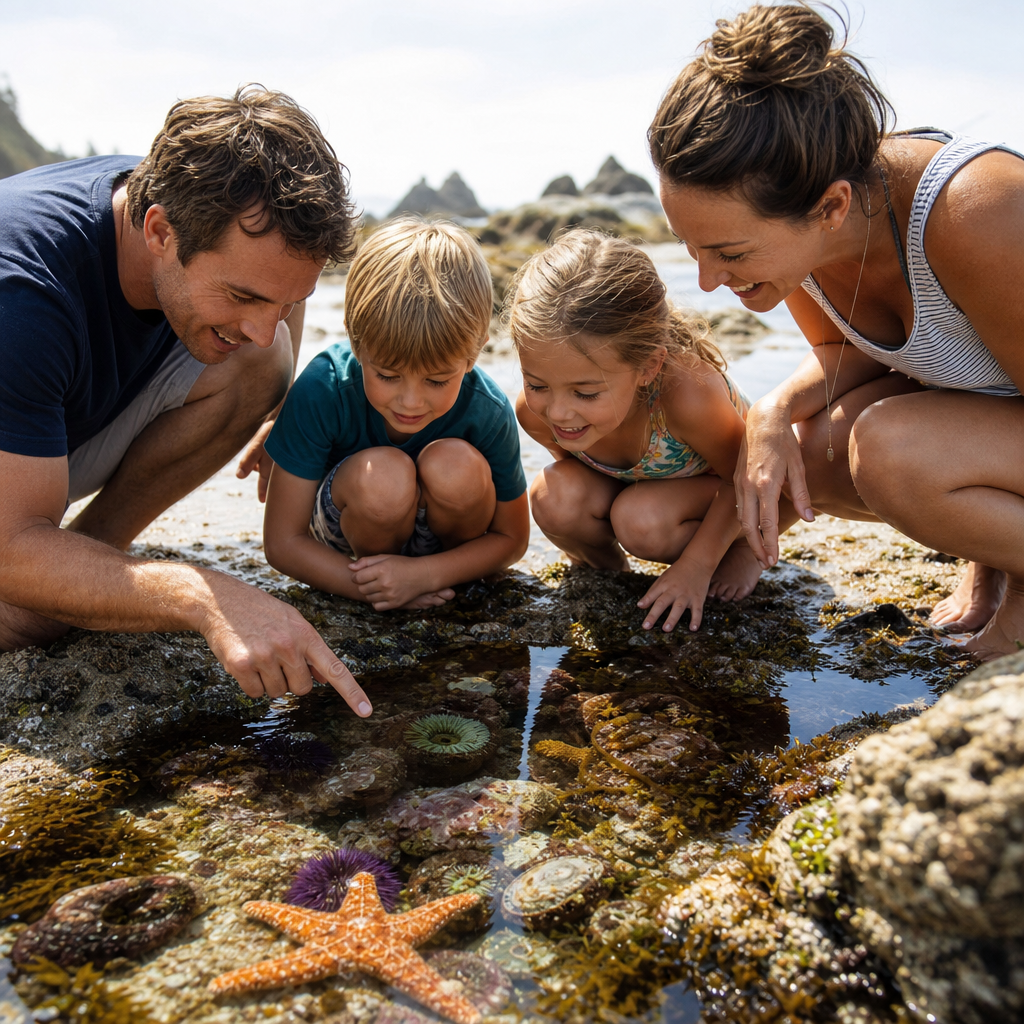
The single most important piece of gear is footwear. Rubber-soled water shoes or neoprene booties grip barnacle-covered rock far better than sandals or sneakers. Wet rocks are slippery, and a fall onto barnacles is painful. Every member of the family needs proper footwear before stepping off the sand onto rock.
Bring a small bucket for temporary observation only, never for collecting animals. A hand lens or magnifying glass turns small periwinkles and tiny hermit crabs into fascinating subjects for children. Polarized sunglasses cut glare off the water surface and dramatically improve visibility into pools. Layers are essential: Gold Beach mornings in the banana belt can be mild, but ocean wind on exposed headlands drops the feel-alike temperature quickly.
Wave Safety on Oregon Rocks
Sneaker waves are a real hazard on the Oregon coast, including at Gold Beach locations. These are unexpected waves that reach significantly higher up the beach or rock shelf than previous waves, and they occur without warning. Oregon State Parks consistently advises visitors never to turn their back on the ocean, and that advice is not performative caution. Keep children within arm’s reach on any exposed rock platform.
Check the National Weather Service marine forecast for the Gold Beach zone before heading out. Swell heights above 8 feet create hazardous surge conditions at the lower intertidal zones even during a minus tide. On those days, stick to Otter Point’s protected cove rather than the open shelves at Meyers Beach.
Leave No Trace Rules for Tide Pools
Oregon’s intertidal zones are protected. Removing any living organism, including shells that still have animals inside, is illegal under Oregon state law. In practice, most families are unaware that hermit crabs occupy shells that look empty, so check carefully before picking anything up. Return every rock to its original position. Do not pour fresh water or sunscreen into pools. Step only on bare rock or mussel beds, never on anemones or coralline algae.
Pro tip: Before your trip, have kids draw a picture of one animal they most want to find at the tide pools. That specific focus keeps children engaged during the walk to the pools and sharpens their observation skills once they arrive, leading to better sightings for everyone.
Combining Tide Pooling with Other Gold Beach Oregon Family Activities
One reason Gold Beach outperforms neighboring destinations like Brookings or Port Orford for family itinerary planning is the density of activities within a short radius. After a morning tide pooling session, the afternoon practically plans itself.
Jerry’s Rogue Jets offers jet boat tours up the Wild and Scenic Rogue River departing from the Gold Beach boat basin. For children old enough to sit through a 2-hour trip, this is a genuinely spectacular follow-up to a tide pooling morning. The contrast between the marine ecosystem on the rocks and the freshwater canyon ecosystem upriver makes for a natural conversation about how different habitats connect.
The Gold Beach Oregon official visitor site lists current fishing charters, local restaurant hours, and event schedules. If you are spending two or more days, the Curry County Historical Museum in Gold Beach provides context for the area’s Indigenous and pioneer history that rounds out an educational family trip well beyond the beach.
Brookings, 28 miles to the south, has its own rocky coastline, and Port Orford 27 miles north is known for its working boat hoist. But neither packages the combination of minus-tide tide pools, a protected river-mouth beach, jet boat access, and a full-service town the way Gold Beach does. For families prioritizing variety without long driving days, Gold Beach is the stronger base camp.
Frequently Asked Questions
What is the best time of year for tide pooling at Gold Beach Oregon?
The best minus tides along the Oregon coast, including at Gold Beach, cluster in late fall, winter, and early spring. However, for family visits, spring (March through May) offers the most practical combination of favorable tides during daylight hours and mild Gold Beach banana belt weather. Summer minus tides often fall in the early morning hours before most families are ready to head out, while winter conditions can bring heavy surf that makes exposed rocky shores unsafe.
Can we collect shells or animals from Gold Beach tide pools?
No. Oregon state law prohibits removing any living organism from intertidal zones. This includes shells occupied by hermit crabs, sea stars, urchins, anemones, and any other marine life. Non-living shells that are clearly empty and unoccupied can generally be collected, but the distinction requires careful inspection. The legal and ecological position is clear: look, photograph, and leave everything in place.
Where do I find tide charts for Gold Beach Oregon?
Use the NOAA Tides and Currents website at tidesandcurrents.noaa.gov and search for Station 9431647, the Rogue River mouth station at Gold Beach. The site provides daily and weekly predictions broken into high and low tide times and heights. Look specifically for morning low tides with readings of 0.0 feet or lower for the best intertidal access. Screenshot the relevant dates because cell service at Meyers Beach can be spotty.
What should we do if someone in our group falls on the rocks?
Barnacle cuts and scrapes are the most common tide pooling injuries at Gold Beach, and they carry a higher infection risk than ordinary cuts because of the marine bacteria present. Rinse any wound thoroughly with clean water as soon as possible, not seawater. Carry a basic first aid kit with antiseptic wipes in your pack. More serious injuries from a fall on rocks or a wave strike require evacuation and a call to 911. The nearest hospital is Curry General Hospital in Gold Beach, located at 94220 Fourth Street.
Is tide pooling at Gold Beach accessible for visitors with mobility limitations?
No Oregon intertidal zone is fully wheelchair accessible because of the uneven rock terrain. The Visitor Center in Gold Beach offers access to South Beach for mobility vehicles. While this does not offer tidepooling, it will allow access to the black sandy beaches of Gold Beach.
If you have explored the tide pools around Gold Beach, share which location surprised you the most and what you discovered there, because firsthand reports from visiting families help everyone plan a better trip.
We would love your feedback and any insights you would share with others. What perspective would you add?
References
- NOAA Tides and Currents: official tide predictions and station data for the Oregon coast including Gold Beach
- Oregon Parks and Recreation Department: state park information including Otter Point and Pistol River State Scenic Viewpoint
- NOAA Ocean Service: educational resources on intertidal ecosystems, tidal zones, and marine life identification
- National Weather Service: marine forecasts and swell height data for the Gold Beach Oregon coastal zone
- U.S. Environmental Protection Agency Oceans Program: guidelines on protecting coastal marine habitats and leave-no-trace practices
1 thought on “Tide Pooling at Gold Beach Oregon: Family Guide”